




Applications for the PCRBIO Research Grant are now open. Please read the eligibility criteria and Ts and Cs carefully before applying.
The grant offers a total of £10,000 funding for PCR reagents to scientists working in human health, microbiology, plant sciences, environment and sustainability, and all other research areas with a biological focus or which require plenty of PCR.
Applications will run from September until 30th November 2026. The results will be announced, and funding will commence, in January 2027.
The PCRBIO Research Grant will be awarded as follows:
- A main award of £6,000 of PCR reagents over 3 years
- 4 runner up prizes of £1,000 of PCR reagents
- Help and technical support with all PCR related queries pertaining to our reagents
This award is ideal for PhD students, post-doctoral researchers, and academics looking for extra funding to expand their lab. To apply, simply complete the application form below.
By submitting this application, you agree to be bound by the grant terms and conditions outlined below, whether or not you have read them in full.
This webpage is for applicants in the UK, if applying in the USA, follow this link.

This grant is open to full-time academic researchers of all levels, from PhD candidates to principal investigators, including lab technicians and lab managers, who submit applications on time. The grant is only available to researchers at UK academic institutions. A parallel grant for US academics is available here.
We encourage members of the same lab group to submit a single joint application describing all PCR work that is carried out in their lab, rather than submitting individual applications.
You may apply on behalf of someone else, but please do so only with their express permission and include their email and personal information, rather than yours.
Please only use an institutional email address in your application, not a personal free domain one (e.g., not @gmail, @outlook, etc.).
Criteria evaluated include:
- Expected impact on the field of study
- Expected broader impact (social/medical/healthcare/diagnostic)
- Novelty
- Clarity, completeness
- How realistic is the requirement for the requested number of PCR reactions?
- PCR Biosystems Ltd (“PCR Biosystems”) retains the right to reject or exclude any application, at any stage of the process, without giving a reason, at our sole discretion. Applications that are incomplete, inaccurate, misleading, submitted after the stated deadline, or otherwise fail to comply with these terms and conditions will not be considered.
- Due to the high volume of applications we normally receive, we do not offer feedback on individual applications. All decisions made by PCR Biosystems and the judging panel are final.
- Grants will be awarded to the recipient’s host laboratory, rather than to the individual applicant, in the form of credit with PCR Biosystems. If you move laboratories before the grant credit is exhausted, the remaining credit will stay with the original host laboratory and may be used by another researcher nominated by that laboratory and approved by PCR Biosystems. The grant will not move with you to your new laboratory unless PCR Biosystems agrees otherwise in writing. The credit cannot be redeemed for cash, transferred to another institution, sold or used to obtain anything other than eligible PCR Biosystems products.
- All applicants will be notified of the outcome of their application by email shortly after the evaluation process is complete. Successful applicants will also be announced on the PCR Biosystems website. Please use a valid email address that is actively monitored for this application. It is your exclusive responsibility to monitor your inbox, including any spam, junk or trash folders, for our relevant communications. Grant credit will only be released once the successful applicant has acknowledged receipt of the notification email, submitted any additional required information, accepted any further grant documentation reasonably required by PCR Biosystems, and provided a suitable headshot photograph. Failure to complete these steps within two weeks of the date on which the original notification email is sent will result in the forfeiture of the grant. PCR Biosystems may then offer the grant to the next highest-scoring applicant based on the judges’ evaluation.
- By submitting your application, you certify that all information provided is complete, accurate and not misleading, and that you have obtained all permissions required from your academic supervisor, host laboratory, institution or department to submit the application, accept the grant and comply with these terms and conditions. It is your responsibility to ensure this is the case before submission. PCR Biosystems may withdraw or recover a grant if any information supplied in connection with the application is found to be materially inaccurate, incomplete or misleading, or if the required permissions were not obtained.
- This grant covers PCR Biosystems reagents and the standard cost of shipping them to the recipient host laboratory. dNTPs and DNA markers are excluded, although exceptions may be made where a reasonable quantity of either product type is ordered with an enzyme and this has been agreed in advance and in writing with your PCR Biosystems account manager. The grant cannot be used for products supplied by any third party, custom development work or any other goods or services unless PCR Biosystems agrees otherwise in writing.
- Funding will commence in January 2027. Recipients may place orders up to the maximum allotted amount, at their discretion and in as many orders as they choose, until 23:59 GMT on 31 December 2030 or until the allotted funds are exhausted, whichever occurs first. The cost of reagents will be deducted from the grant at the PCR Biosystems product list price applicable on the date the order is placed. Any remaining credit will expire automatically at that time and cannot be extended, transferred, refunded or exchanged for cash. Any order exceeding the remaining grant balance will require payment of the difference by the recipient host laboratory as per our standard terms and conditions.
- All orders are subject to product availability, any applicable account requirements and PCR Biosystems’ standard terms and conditions of sale. PCR Biosystems does not guarantee the continued availability of any particular product, pack size or formulation during the grant period. Where a product is discontinued or unavailable, PCR Biosystems may offer a suitable alternative at its discretion.
- Grant applications will be assessed by an internal team of PCR experts, and a shortlist will be reviewed by a mixed judging panel of internal and external research experts. Applications will be assessed against the stated evaluation criteria. PCR Biosystems reserves the right to appoint replacement judges where necessary.
- Multiple applications from the same individual will not be considered. Where multiple applications are submitted by the same individual, PCR Biosystems may consider only the first complete application received or may exclude all applications submitted by that individual.
- Only one grant will be awarded per research group. PCR Biosystems will determine whether applicants belong to the same research group, laboratory or substantially related project and may reject or combine applications where appropriate.
- Grant recipients agree that their name, photograph, job title, institute name, general research area and grant award may be published by PCR Biosystems on its website, social media channels and other promotional materials in connection with the grant.
- Following their acceptance of the grant, grant recipients agree to produce a short video in which they introduce themselves, explain their research and discuss how the grant will aid their project. The video must be supplied within a reasonable timeframe agreed with PCR Biosystems and may be edited for length, formatting and accessibility, provided that its meaning is not materially altered.
- Grant recipients agree to participate in a follow-up interview with PCR Biosystems during the grant period. The interview may be recorded and published in written, audio or video format across PCR Biosystems’ website, social media channels and other promotional materials.
- In addition, grant recipients agree to provide PCR Biosystems with a second piece of content for promotional use. This may include a short science communication video, written testimonial, Q&A, laboratory photograph or video, data image, video discussing their work with PCR Biosystems reagents, or another similar piece of content agreed with PCR Biosystems. The recipient of the main £6,000 grant agrees to provide at least one such piece of content during each calendar year while actively using the grant, until the grant credit is exhausted or expires.
- Grant recipients give PCR Biosystems a non-exclusive, worldwide, royalty-free licence to use, reproduce, edit, adapt, publish and distribute the photographs, videos, interviews, testimonials and other content supplied under these terms and conditions in connection with the grant and the promotion of PCR Biosystems. This licence applies across print, digital, website, email and social media channels and continues after the grant period has ended. PCR Biosystems will not materially misrepresent the recipient, their research or their views.
- Grant recipients confirm that they have the right to provide all photographs, videos, data images and other content supplied to PCR Biosystems and that its use by PCR Biosystems will not infringe any third-party rights, confidentiality obligations, institutional policies or applicable laws. Recipients must obtain any necessary permission from individuals shown or identified in the content and must not provide confidential, personal, patient-identifiable or commercially sensitive information.
- Grant recipients agree to acknowledge PCR Biosystems funding in all publications, posters, presentations and other publicly available works containing data generated using PCR Biosystems reagents acquired through the grant, where such acknowledgement is permitted by the relevant publisher, institution or conference organiser. The acknowledgement should identify PCR Biosystems Ltd and the PCR Biosystems Research Grant.
- Grant credit may only be used for legitimate research purposes by the recipient host laboratory. It may not be resold, used to purchase products for resale, applied retrospectively to previous orders or combined with another discount, promotion, credit arrangement or special pricing unless PCR Biosystems agrees otherwise in writing.
- PCR Biosystems may suspend or withdraw a grant, cancel unused credit or require repayment of credit already used where a recipient breaches these terms and conditions, misuses the grant, acts fraudulently, brings PCR Biosystems into serious disrepute, or becomes unable to continue the research for which the grant was awarded. Where reasonably possible, PCR Biosystems will give the recipient an opportunity to explain the circumstances before making its final decision.
- PCR Biosystems may verify information provided in an application and may contact the applicant’s supervisor, host laboratory or institution for this purpose. Applicants and recipients agree to provide any additional information reasonably required to confirm their application, institutional approval or use of the grant.
- PCR Biosystems reserves the right to suspend, cancel or amend the grant programme where circumstances beyond its reasonable control make this necessary. Any amendment will not materially disadvantage applicants or recipients who have already accepted a grant, except where required by law or where continuing the programme is no longer reasonably possible.
- To the fullest extent permitted by law, PCR Biosystems will not be responsible for applications, notifications or other communications that are lost, delayed, incomplete, corrupted, misdirected or not received because of technical failures, email filtering, incorrect contact details or circumstances beyond its reasonable control.
- Nothing in these terms and conditions excludes or limits liability where it would be unlawful to do so. Subject to this, PCR Biosystems will not be liable for any indirect or consequential loss arising from an application, the grant programme, the use of grant credit or the availability or use of products supplied under the grant.
- Your personal data will be used to administer the grant programme, assess applications, contact applicants and recipients, verify information, provide grant credit and carry out the publicity activities described in these terms and conditions. Further information about how PCR Biosystems uses and protects personal data is provided in our privacy policy.
- If any provision of these terms and conditions is found to be invalid or unenforceable, the remaining provisions will continue in full force and effect.
- These terms and conditions and any dispute arising from them will be governed by the laws of England and Wales. The courts of England and Wales will have exclusive jurisdiction, except where applicable law gives an applicant or recipient the right to bring proceedings in another jurisdiction.

Dr. Andy Plackett
Royal Society University Research Fellow
University of Birmingham
Dr Andy Plackett is a Royal Society University Research Fellow at the University of Birmingham. He studies plant evolution and development (evo-devo), currently investigating how seeds and seed-based reproduction first evolved and then diversified via the lens of evolving gene networks. To do this, he and his group primarily use genetic engineering, gene expression analysis and next-generation sequencing in a plant that doesn’t actually produce seeds- the model fern (Ceratoperis richardii), representing the closest living relatives to all seed-bearing plants. He is also a member of the Birmingham Institute of Forest Research (BIFoR), studying gene expression and reproductive development in oak trees as an alternative life-strategy to the fast-paced annual model Arabidopsis thaliana, and a side-project attempting to speed-breed oak trees. His previous postdoctoral experience involves developmental genetics of Arabidopsis flowers and rice leaf development

Dr. Aidan Taylor
Lecturer in Microbiology
University of Reading
Dr. Aidan Taylor is a Lecturer in Microbiology and Programme Director for Microbiology at the University of Reading. In addition to teaching, his research focuses on the photodynamic inactivation of Campylobacter by blue light, molybdenum and tungsten co-factor biosynthesis and regulation and non-canonical bacterial nitrogen metabolism.

Dr. Carolina Costa
Blaschko Research Fellow in Pharmacology
University of Oxford
Dr. Carolina Costa holds a European PhD in Biomedical Sciences from the University of Porto (Portugal) and is currently the Blaschko Research Fellow at the Department of Pharmacology at the University of Oxford. Her research focuses on human-microbe interactions and their impact on the brain, from the gut-brain axis to neuroinflammation. Her current work investigates how bacteria enter the brain and their potential role in lesion formation and neuroinflammation in Multiple Sclerosis.

Dr. Constantine Garagounis
Product Manager
PCR Biosystems
Dr. Constantine Garagounis studied Biochemistry and Biotechnology and has a DPhil in Plant Sciences from the University of Oxford. He worked as a post-doctoral researcher and contract lecturer on plant secondary metabolism and how it affects plant microbe interactions. He has conducted various research projects in plant synthetic biology and engineering plant metabolic pathways and lectured in corresponding courses. He is currently working as a Product Marketing Specialist for PCR Biosystems.

Luke Haddock
PhD candidate
University of Warwick
2025 Main Grant Winner – Developing a high-throughput multiplex diagnostic test for respiratory pathogens implicated in inflammatory bowel disease (IBD).

Sophia D'Alessandro
PhD Researcher
Imperial College
Studying the mechanisms through which breastfeeding reduced the risk of breast cancer in women.
Aidan J. Taylor
Senior Researcher
University of Reading
Improving qPCR-based screening approach to detect variants of Shiga toxin-producing E. coli.

Aralolaoluwa Ogunrin
PhD Candidate
Swansea University
Studying the role of E.coli in bacterial sepsis & developing diagnostic testing panels.

Charlotte Willoughby
PhD Candidate
University of Edinburgh
Using sensitive molecular diagnostics to study “invisible malaria” and improve reliability of testing.

Martha McLaughlin
Post-doctoral Researcher
University of Sussex
2024 Main Grant Winner – Developing novel small RNA biomarkers for Motor Neuron Disease diagnosis.

Jeffrey Kelu
Post-doctoral Researcher
King's College London
Investigating the impact of disrupted circadian rhythms on transcription in skeletal muscles.

Debabrata Dutta
Post-doctoral Researcher
Heriot-Watt University
Studying the role of small secreted proteins in mediating wheat resistance to Septoria tritici (wheat blotch disease).

Carlos Abelardo dos Santos
Graduate Student
University of Warwick
Validating RT-LAMP assays for in-field detection of Influenza D (IVD) in livestock.

Isabel Hughes
Graduate Student
University of Warwick
Field study on the prevalence of Wolbachia endosymbiosis in mosquitoes (as a means of preventing malaria) in Sub-Saharan Africa.

Tegan Hibbert
PhD Candidate
University of Liverpool
2023 Main Grant Winner – Respiratory environment, P. aeruginosa, A. xylosoxidans, species interactions, virulence, therapeutic model development

Helen Cockerton
Research Fellow
University of Kent
2023 Runner Up – Fungal pathogen plant interactions

Christos Velanis
Lecturer
The Open University
2023 Runner Up – Microalgal engineering

Golsana Haghdousti
Graduate Student
University College London
2023 Runner Up – Investigating the role of manganese in brain physiology and disease

Kai Kean
Graduate Student
University of Oxford
2023 Runner Up – Developing diagnostic assays to test for infections and viraemia in blood/platelet transfusion samples.
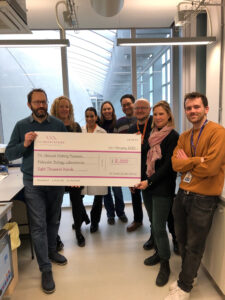
Elena Lugli
Post-doctoral Researcher
Natural History Museum, London
2022 Main Grain Winner – Molecular Biology Research

Bruno Salomone Gonzalez de Castejon
Researcher
University of Bristol
2022 Runner Up – Biomedical Science

Robert Baldock
Senior Researcher
University of Portsmouth
2022 Runner Up – Biomedical Science

Victor Tapia Olivares
Post-doctoral Researcher
University of Mancherster
2022 Runner Up – Biomedical Science

Sareen Galbraith
Senior Researcher
Leeds Beckett University
2022 Runner Up – Biomedical Science
