
Starting a PhD or postdoc project: what to get right early on
Our product manager, Costa Garagounis, has combined project and career-related advice from opinion pieces and editorials in research journals with his own experience into a short blog for researchers. We hope this will be a help to everyone starting new projects this academic year.
It’s easy to feel at a loss at the start of your PhD or postdoc project. You’re in a new environment, meeting new people, are learning the ropes, reading your lab’s relevant published papers and sifting through the previous PhD student’s messy lab notes, partial protocols, and SOPs. Your supervisor confidently told you that “this method works reliably in the lab. Susie could do it as easily as make her morning coffee”. Meanwhile, you’re still finding out where everything is in the lab and who to talk to if something is broken – “Oh, no, our lab manager doesn’t do that. The facilities manager is responsible for it, but he’s away on sick leave and won’t be back for a month or so”. Simultaneously, there is a large, important question that you are supposed to answer by providing data of publishable quality. Ideally, with multiple peer-reviewed publications, if you want to stand a chance at a career in modern academia.
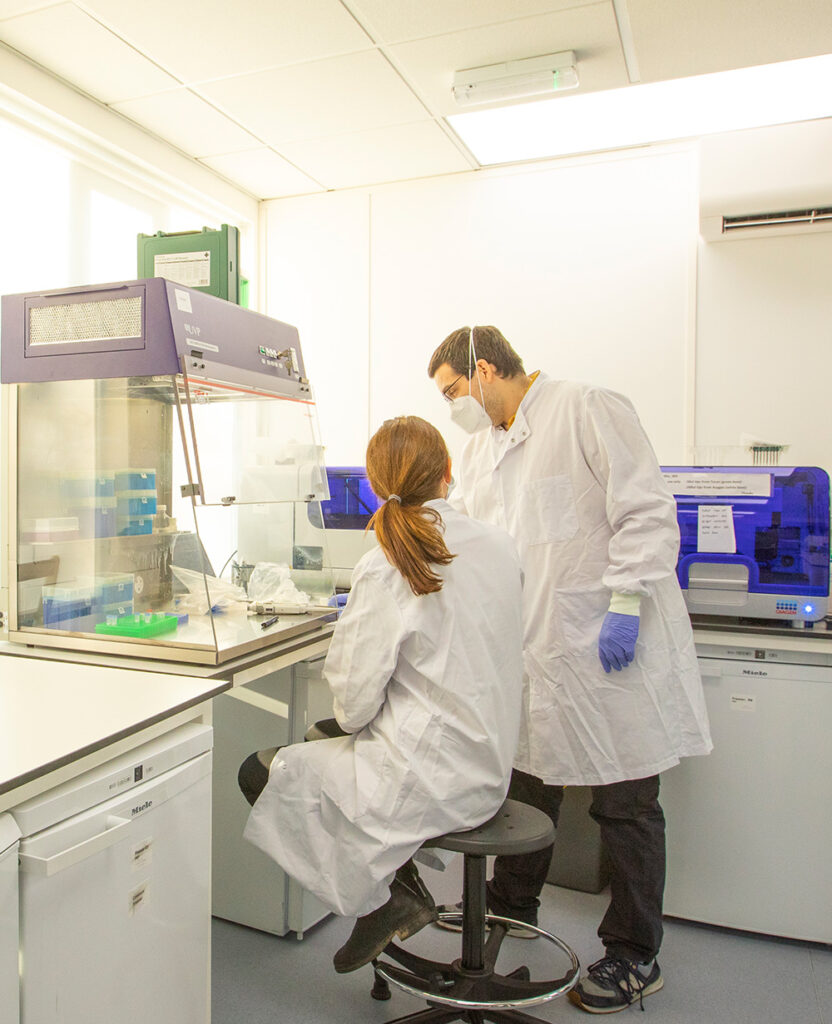
It is tempting to respond to all this by doing as many experiments as possible. But a busy start is not necessarily a useful one. The better question is: what do you need to do first so that the rest of the project has a chance of working?
Work out what your project actually needs to show
Most project descriptions are written at a much higher level, to satisfy grant judges or a departmental scholarship committee, than the work you will do next Tuesday. Identify the broader aim and break it down into achievable tasks. What data would support the idea? What result would make you doubt it or reject it outright? Are there methods, controls or samples that must work before either result means anything?
In a recent column Angel Santiago-Lopez advises researchers to define the scope of their work, set milestones and decide what success would look like along the way. That sounds fairly obvious in the abstract, but it is easy to forget when you just want to get going in the lab. It can also save you from spending weeks on an interesting side question that does little to advance the main one.
This applies to postdocs too, although the conversation may be slightly different. As well as agreeing with your supervisor what the project needs to deliver, it is worth discussing which parts you might be able to pursue independently.
If you feel there are many different directions the project can go, make a note of them. They can either form a fallback plan, if your main project doesn’t work out, or you can pick them up during a slow period of your work later. Starting everything all at once, at the very start of a project, is a recipe for rushed work, unnecessary stress, and potentially burnout.
Try to identify the problems early
Your first experiment doesn’t have to be impressive. Ideally, it should tell you whether the basic assumption of your project is sound.
If the whole project relies on an assay, make sure the controls and sensitivity are good enough. If it relies on a particular sample type, find out whether you can obtain and work with those samples reliably. It’s better to discover a limitation early on than after six months of collecting data that you later decide is unusable or impossible to interpret.
Make sure you have good quality starting materials, cell lines, microbe strains, and reagents. I remember receiving a yeast strain that I was meant to use for recombinant protein expression. We got it from another lab. It was supposed to be an empty strain we could use for new constructs, but it took a month of troubleshooting to figure out it already contained a construct conferring selection resistance and I wasn’t just dealing with a persistent contamination issue.
Santiago-Lopez makes a general point: break the larger question into smaller tasks that help you identify project weaknesses early on. I’d add the more specific suggestion: identify the key experiments first, read up on the relevant literature, make a list of all the things you’ll need – reagents, samples, controls and equipment – and make sure you have it all before starting. You will probably have to change something. That’s normal in research. It’s fine provided you notice it and act on it.
Clarify expectations & set clear checkpoints
Ask your supervisor how often they want to meet, what they expect in an update, and when they would want to hear that something is going wrong. Find out who else knows the methods you will be using. Is it that final-year PhD student or the jaded senior postdoc who’s hustling for fellowships? You may not need much help at first, but it is good to know where to go when you do.
I was lucky myself. I had an experienced postdoc, who was working on her own project, but I could always go to her with experimental questions and practical advice. There may not be such a person in your lab, but there will be someone in your department. Having one or more such contacts is great. Ideally, try to build such relationships early on in your project.
There’s a practical reason for being clear about all this. In this article, a PhD candidate describes experiments that are not working and a supervisor who is rarely available for detailed mentoring. If it gets to that stage, asking for help feels much harder than it might have at the beginning.
You’re not looking for a formal schedule, but you need clarity on what you agreed to try, and when you’ll need to look at the results together to keep things moving in the best direction.
Give the project a route out of a dead end
A plan is useful, but don’t be attached to it at all costs. Set a threshold at which you and your supervisor will review the approach. What have you learned? What still needs answering? Is the next experiment still the right next step?
In this recent piece, by Christine Ro, advisers suggest agreeing an alternative approach and, crucially, what would trigger a move to it. That makes switching to “plan B” a decision you can take on the evidence, rather than something you’d only consider when you are thoroughly fed up.
Sometimes the difficulty is broader than an experiment. An account of working in three labs over three years shows how a promising project and capable colleagues can still be affected by circumstances that were impossible to anticipate. It is perhaps anecdotal but is a useful reminder to check whether the specific lab and the project are the right place for you.
Remember that you are developing too
It’s very easy to judge a PhD or postdoc solely by the data coming out of it. To an extent that is a valid metric. However, remember to take stock of what you are learning as a researcher as well: experimental design, data analysis, writing, presentation skills, collaborating with others, perhaps supervising someone for the first time. Which skills are required for the next step, and are you getting the opportunities to build them? Keep in mind many of these skills are also transferable into other disciplines or careers. So, if you ever choose to step away from academia, there are many jobs out there where the skills you’ve developed are desirable.
A Nature Careers discussion of individual development plans describes how one postdoc used a plan to identify technical skills she lacked and think about career options. It also points out a limitation: a career plan has to fit your life goals and personal priorities, not just your CV.
In short: you do not need to have your entire PhD or postdoc mapped out in week one. Start with a question you can test, make sure you know who to ask for help, and don’t be afraid of revising the plan when the results tell you to. That is a solid beginning.