
Lyo-Ready Inhibitor-Tolerant Probe Mix & Probe 1-Step Kit

Next-generation dryable qPCR and 1-Step RT-qPCR reagents for inhibitor-tolerant lyophilised qPCR applications
The Lyo-Ready Inhibitor-Tolerant Probe Mix and 1-Step Kit are 4× concentrated qPCR master mixes developed for robust performance in the presence of common PCR inhibitors. Designed specifically for lyophilisation, it delivers high sensitivity and reproducibility across challenging sample types, including crude extractions, clinical matrices, and environmental samples.
Whether you’re developing point-of-care diagnostics, field-deployable assays, or direct amplification workflows, this ready-to-dry mix enables reliable amplification even where standard reagents fail.
The Lyo-Ready Inhibitor-Tolerant Probe Mix and Lyo-Ready Inhibitor-Tolerant Probe 1-Step Kit are the next generation of our lyophilisation-ready reagent technology, combining robust inhibitor tolerance, fast cycling capability, and consistent post-lyophilisation performance.
Developed for use in demanding assay environments, both the probe and probe 1-step formulations enable the creation of ambient-stable diagnostic tests that maintain the high sensitivity, specificity, and reproducibility expected from PCR Biosystems reagents.
- Lyo-Ready Inhibitor-Tolerant Probe Mix – designed for DNA detection in probe-based qPCR assays.
- Lyo-Ready Inhibitor-Tolerant Probe 1-Step Kit – formulated for RNA detection in one-step RT-qPCR with separate UltraScript® Reverse Transcriptase.
Both mixes perform reliably even with crude or inhibitor-rich samples such as blood, swab eluates, or environmental matrices.
Features
- Superior inhibitor-tolerance
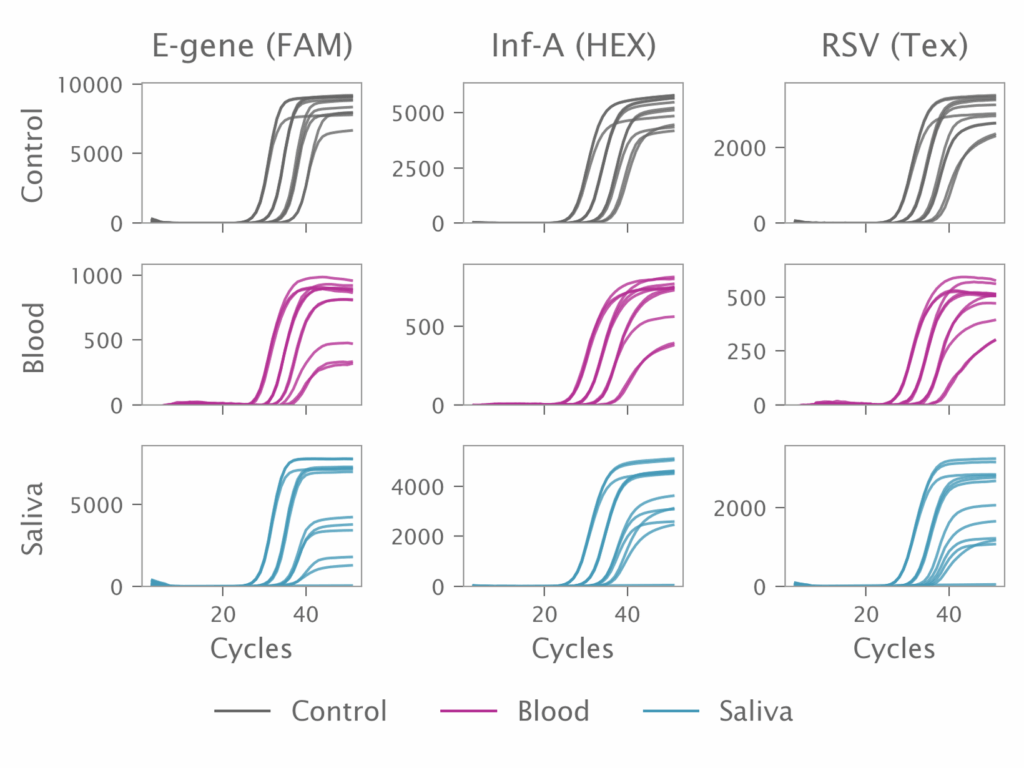
- Suitable for crude blood & saliva
- Includes a glycerol-free 4x qPCR mix
- Reliably lyophilises into beads or cakes
- DNA mix or 1-step RNA kit with UltraScript® RTase & RNase inhibitor
- Ideal for single targets & multiplex
- Capable of ultra-fast cycling 1s/3s denaturation/combined annealing-extension
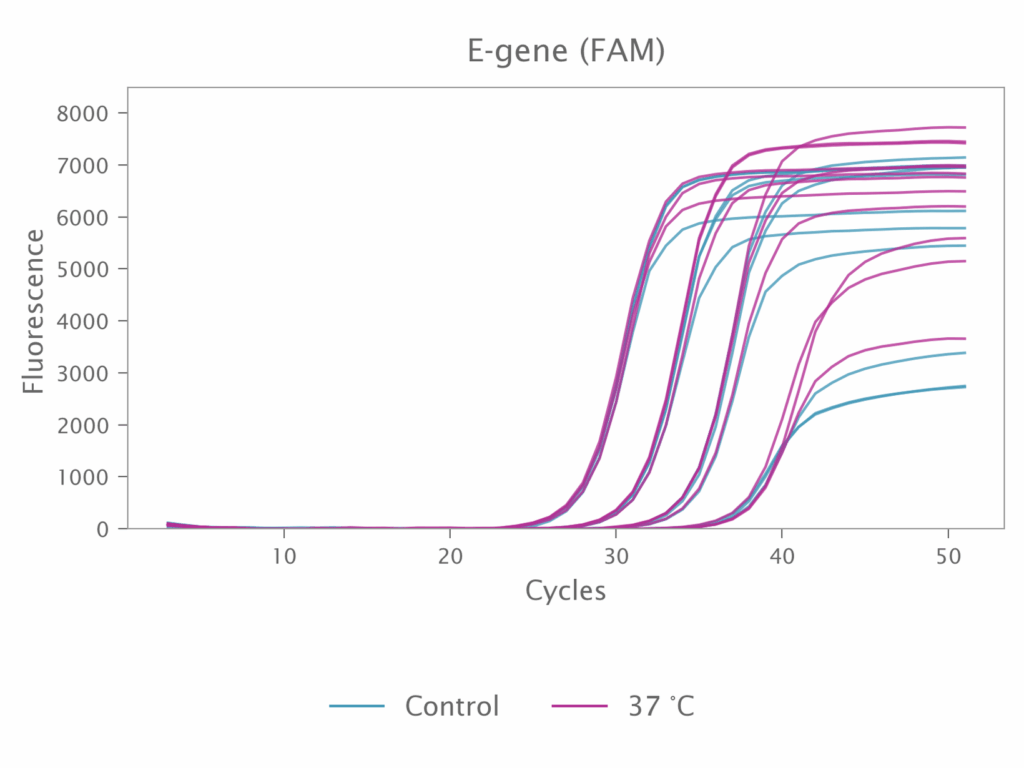
- Ambient temperature* storage and shipping of dried reactions
- Stable at ambient temperature for at least one year
Applications
- Pathogen detection from crude biological samples
- Point-of-care and portable diagnostic devices
- Environmental and veterinary testing
- High-throughput screening workflows
Optimised for Lyophilisation
Lyophilisation offers several key benefits: ambient storage, extended shelf-life, and simplified transport for diagnostic assays and field applications.
Both mixes have been engineered to maintain full enzymatic activity and reproducibility after complete lyophilisation and reconstitution. Their high glass transition temperature (Tg = 74.6 °C) provides excellent stability during drying and subsequent storage.
Users can confidently prepare lyophilised or bead-based assays without modifying existing qPCR or RT-qPCR workflows.
Robust and Reliable Performance
Each mix contains a glycerol-free 4× qPCR formulation with hot-start Taq polymerase, dNTPs, MgCl₂, and proprietary excipients designed to preserve performance through the drying process.
Antibody-mediated hot-start technology ensures specific amplification and improved tolerance to inhibitors commonly present in clinical or environmental samples (see overview of PCR inhibitors).
The 1-Step Kit includes UltraScript® Reverse Transcriptase, a thermostable, high-yield enzyme supporting fast and efficient cDNA synthesis up to 55 °C. The combination of high sensitivity, inhibitor tolerance, and lyophilisation stability makes both products ideal for multiplex assays, direct amplification from crude material, and rapid diagnostic development.
Performance Highlights
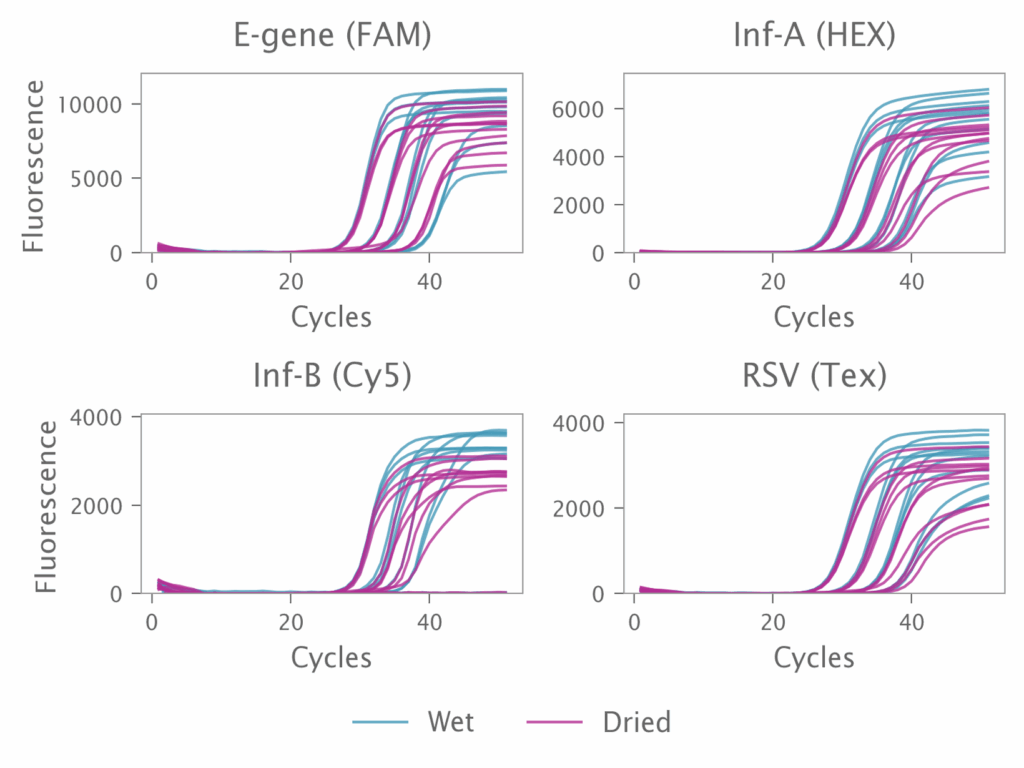
- Consistent efficiency and Ct values before and after lyophilisation.
- Maintains high sensitivity across a wide range of template concentrations.
- Demonstrated robust multiplex detection of viral RNA (e.g. SARS-CoV-2, Influenza A/B, RSV).
- No significant change in amplification efficiency or signal after reconstitution.
Customisable Diagnostic Assay Development
At PCR Biosystems we recognise that each molecular diagnostic workflow is unique, especially when transitioning to lyophilised formats.
To support assay developers, we offer comprehensive technical support for early-stage verification and optimisation, alongside custom formats, bulk supply, and OEM manufacturing options. Our technical team provides tailored guidance to help streamline assay development and drying protocols.
ISO 13485 Quality Assurance
The Lyo-Ready Inhibitor-Tolerant Probe Mix and Probe 1-Step Kit are manufactured under our ISO 13485-certified Quality Management System, ensuring consistency, traceability, and suitability for use in regulated diagnostic workflows and commercial kit manufacture.
Why Choose the Lyo-Ready Inhibitor-Tolerant Range
The Lyo-Ready Inhibitor-Tolerant Probe Mix and Probe 1-Step Kit combine high inhibitor tolerance, fast cycling, and exceptional post-lyophilisation performance, giving you the flexibility to create stable, ready-to-use assays for laboratory and field applications alike.
Whether you’re developing diagnostic kits, scaling OEM manufacturing, or simplifying logistics through ambient storage, these reagents provide the robust, reproducible performance expected from PCR Biosystems, now with the added freedom of lyophilised assay design.
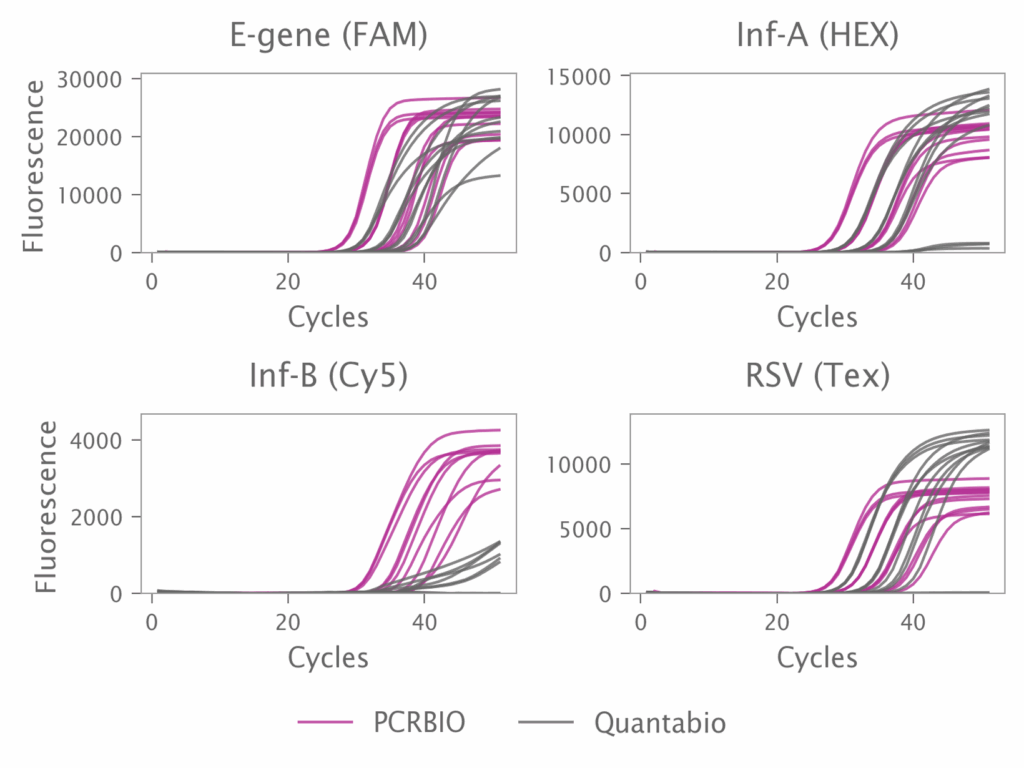
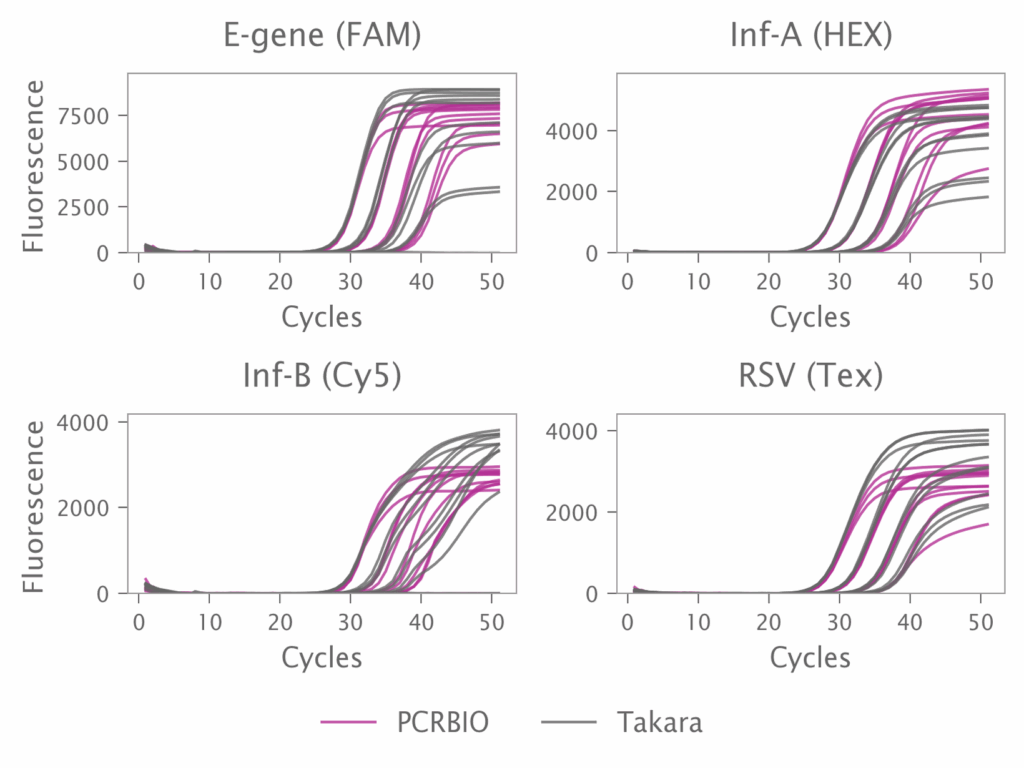
High performance versus competitors
Documents

Product Flyers


Product Manuals

Material Safety Data Sheets

Certificate of Analysis Finder
Specifications
Lyo-Ready Inhibitor-Tolerant Probe Mix
Component
200 Reactions
600 Reactions
2000 Reactions
10 000 Reactions
4x Lyo-Ready Inhibitor-Tolerant Probe Mix
1 x 1 mL
3 x 1 mL
2 x 5 mL
1 x 50 mL
Lyo-Ready Inhibitor-Tolerant Probe 1-Step Kit
Component
200 Reactions
600 Reactions
2000 Reactions
10 000 Reactions
4x Lyo-Ready Inhibitor-Tolerant Probe Mix
1 x 1 mL
3 x 1 mL
2 x 5 mL
1 x 50 mL
1000x UltraScript® RTase
1 x 4 μL
1 x 12 μL
1 x 40 μL
1 x 200 μL
Lyo-Ready Inhibitor-Tolerant Probe Mix
Component
4x Lyo-Ready Inhibitor-Tolerant Probe Mix
200 Reactions
1 x 1 mL
600 Reactions
3 x 1 mL
2000 Reactions
2 x 5 mL
10 000 Reactions
1 x 50 mL
Lyo-Ready Inhibitor-Tolerant Probe 1-Step Kit
Component
4x Lyo-Ready Inhibitor-Tolerant Probe Mix
1000x UltraScript® RTase
200 Reactions
1 x 1 mL
1 x 4 μL
600 Reactions
3 x 1 mL
1 x 12 μL
2000 Reactions
2 x 5 mL
1 x 40 μL
10 000 Reactions
1 x 50 mL
1 x 200 μL
Reaction Volume
Storage
20 μL
On arrival, products should be stored between -30 °C and -20 °C. If stored correctly the kit will retain full activity until the indicated expiry date.
Reaction Volume
20 μL
Storage
On arrival, products should be stored between -30 °C and -20 °C. If stored correctly the kit will retain full activity until the indicated expiry date.
Instrument Compatibility
This product is compatible with all standard and fast cycling qPCR instruments that do not require passive reference dye. If passive reference is required, please contact our team for custom solutions.
FAQs
Can I run a melt curve analysis with PCR Biosystems probe-based qPCR mixes?
Yes, a melt curve analysis can be useful when using dual hybridisation probe strategies, or when developing bespoke assays, where a DNA-intercalating dye is added into a probe-based qPCR mix. Running such an analysis when using hydrolysis probes is not advised, because the probe-dye will already be released in solution and temperature fluctuation/denaturation will not produce useful information on the PCR product.
Using crude blood as template reduces fluorescence, can I trust my results?
Yes, results are still accurate even with reduced fluorescence. We have observed even 10-fold reduction in the fluorescence plateau when amplifying the same target in crude blood versus extracted samples. However, there is no inhibition of the mix up to the levels we have tested (6.25% crude blood:EDTA), this can be verified either by normalising fluorescence between crude blood and other samples, or by modifying the threshold used so that it is always the same percentage of the max fluorescence reached (e.g., 10%).
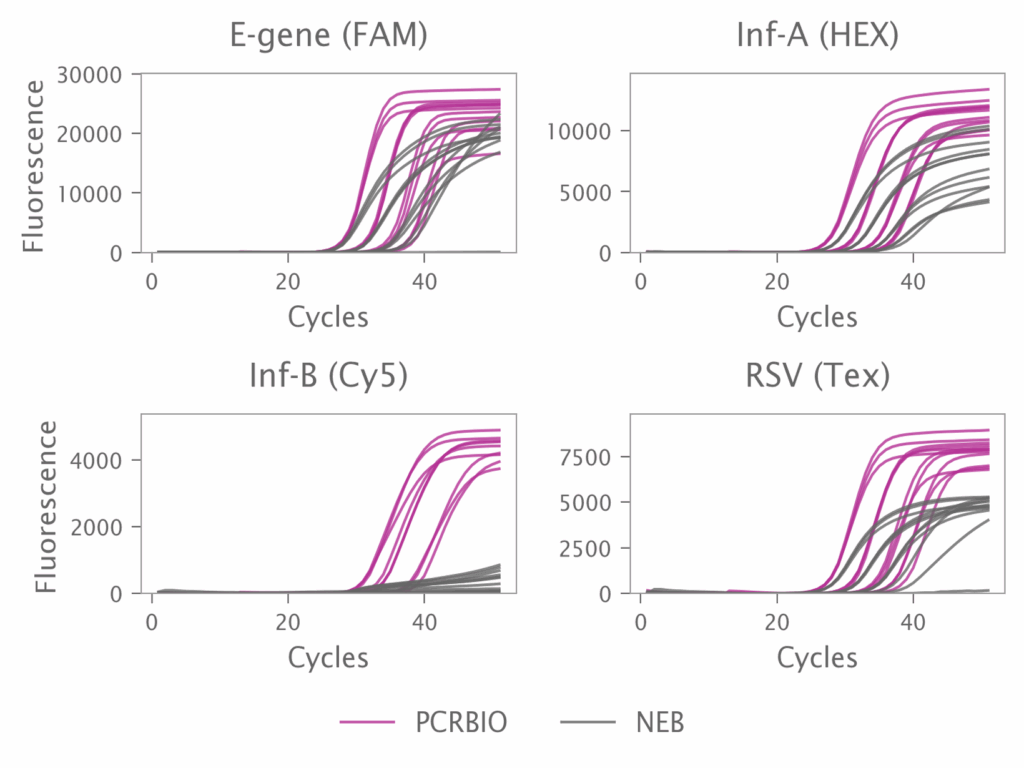
Is it normal if the fluorescence of 4x Lyo-Ready Inhibitor-Tolerant Probe Mix differs from the one obtained with competitors’ products?
Different products could give a different plateau of fluorescence. However, this has no impact on quantification accuracy and Ct values will not differ among products.
What should be considered when doing multiplex amplification with the Lyo-Ready Inhibitor-Tolerant Probe 1-Step Kit?
The primers should be designed to ensure that they have similar annealing temperatures, are specific to the target, and do not form primer dimers. The length of the reverse transcription phase can be extended to 10 minutes to ensure there is enough template for priming and amplification.
What is the MgCl2 concentration in the 4x Lyo-Ready Inhibitor-Tolerant Probe Mix?
4x Lyo-Ready Probe Mix contains MgCl2 at a concentration of 18 mM. This means the final concentration in the reaction is 4.5 mM.
Can ROX be added to the Lyo-Ready Inhibitor-Tolerant Probe (1-Step) Mix and can it have a negative impact on the reaction?
Yes, ROX (6-carboxy-X-rhodamine), available separately, can be added to the kit and it would not interfere with the lyophilisation process.
ROX is used as a passive reference dye in ROX-dependent real-time PCR instruments to normalize for variations of fluorescence levels that can arise mainly due to optical path variations among wells. Normalisation of the fluorescence intensity (Rn) is done in real-time PCR software by dividing the emission intensity of the specific signal by the emission intensity of ROX.
ROX does not take part in the PCR reaction and its fluorescence levels are not proportional to the quantity of template in each well, so the addition of this fluorophore to a mix provides a constant fluorescent signal during amplification.
Different types of real-time PCR instruments requiring a passive reference standard have different optimal concentrations of ROX, mainly due to the different optical configurations of each system (i.e., the different type of excitation source and optics used).
The addition of either too little or too much ROX would result in a very noisy signal impacting on the results of the reaction. Therefore, it is extremely important for the user to:
- Determine the correct ROX concentration to optimise real-time PCR results, and
- Check the ROX settings on the software used to set up the reaction
A useful selection tool for the most commonly used systems can be found here.
Can other components be added to the Lyo-Ready Inhibitor-Tolerant Probe (1-Step) Mix before lyophilisation?
We have not screened for any other components to add to the Lyo-Ready Inhibitor-Tolerant Probe (1-Step) Mix apart from primers, probes and ROX. If you would like to add extra lyo-compatible components, you will need to test their activity in both the wet mix and the lyophilised material, as well as assess their stability over the time. PCR Biosystems is not responsible for any loss of performance caused by the added component.
How can I set up a fast thermal cycling program for Lyo-Ready Inhibitor-Tolerant Probe reagents?
We recommend:
A reverse transcription (RT) step for 3 min between 45-55 °CAn initial denaturation step of 95 °C for 2 minPrecycling: 4x [95 °C 1 s – 60 °C 5 s (no signal acquisition)]Cycling: 40-50x [95 °C 1 s – 60 °C 3 s (with signal acquisition)]
Can other components be added to the Lyo-Ready Probe 1-Step Mix before lyophilisation?
We have not screened for any other components to add to the Lyo-Ready Probe 1-Step Mix apart from primers, probes and ROX. If you would like to add extra lyo-compatible components, you will need to test their activity in both the wet mix and the lyophilised material, as well as assess their stability over the time. PCR Biosystems is not responsible for any loss of performance caused by the added component.
What shall I do in case of problems with lyophilisation?
In the product manual and associated drying guide we provide a general lyophilisation protocol, tested for 2 mL glass vials filled with 500 μL of the Lyo-Ready (Inhibitor-Tolerant) Probe (1-Step) Mix. We observed that lyophilisation is facilitated (i.e., the program is shorter, and cakes have a more uniform aspect with no signs of shrinkage) when the Lyo-Ready (Inhibitor-Tolerant) Probe (1-Step) Mix is diluted to 1x or 2x (with oligonucleotides and water), so we recommend doing this dilution before starting the run.
Depending on the volume lyophilised, the material of the vials (i.e., glass vs plastic) and the lyophiliser used, the cycle may be optimised.
If the cakes are not properly formed after the cycle, we recommend repeating with a more conservative cycle, in which the primary drying is carried at -50 °C and time is extended to guarantee the correct cake formation. Secondary drying phase could also be extended if required.
The Lyo-Ready Inhibitor-Tolerant Probe Mix and Lyo-Ready Inhibitor-Tolerant Probe 1-Step Kit are the next generation of our lyophilisation-ready reagent technology, combining robust inhibitor tolerance, fast cycling capability, and consistent post-lyophilisation performance.
Developed for use in demanding assay environments, both the probe and probe 1-step formulations enable the creation of ambient-stable diagnostic tests that maintain the high sensitivity, specificity, and reproducibility expected from PCR Biosystems reagents.
- Lyo-Ready Inhibitor-Tolerant Probe Mix – designed for DNA detection in probe-based qPCR assays.
- Lyo-Ready Inhibitor-Tolerant Probe 1-Step Kit – formulated for RNA detection in one-step RT-qPCR with separate UltraScript® Reverse Transcriptase.
Both mixes perform reliably even with crude or inhibitor-rich samples such as blood, swab eluates, or environmental matrices.
Features
- Superior inhibitor-tolerance
- Suitable for crude blood & saliva
- Includes a glycerol-free 4x qPCR mix
- Reliably lyophilises into beads or cakes
- DNA mix or 1-step RNA kit with UltraScript® RTase & RNase inhibitor
- Ideal for single targets & multiplex
- Capable of ultra-fast cycling 1s/3s denaturation/combined annealing-extension
- Ambient temperature* storage and shipping of dried reactions
- Stable at ambient temperature for at least one year
Applications
- Pathogen detection from crude biological samples
- Point-of-care and portable diagnostic devices
- Environmental and veterinary testing
- High-throughput screening workflows
Optimised for Lyophilisation
Lyophilisation offers several key benefits: ambient storage, extended shelf-life, and simplified transport for diagnostic assays and field applications.
Both mixes have been engineered to maintain full enzymatic activity and reproducibility after complete lyophilisation and reconstitution. Their high glass transition temperature (Tg = 74.6 °C) provides excellent stability during drying and subsequent storage.
Users can confidently prepare lyophilised or bead-based assays without modifying existing qPCR or RT-qPCR workflows.
Robust and Reliable Performance
Each mix contains a glycerol-free 4× qPCR formulation with hot-start Taq polymerase, dNTPs, MgCl₂, and proprietary excipients designed to preserve performance through the drying process.
Antibody-mediated hot-start technology ensures specific amplification and improved tolerance to inhibitors commonly present in clinical or environmental samples (see overview of PCR inhibitors).
The 1-Step Kit includes UltraScript® Reverse Transcriptase, a thermostable, high-yield enzyme supporting fast and efficient cDNA synthesis up to 55 °C. The combination of high sensitivity, inhibitor tolerance, and lyophilisation stability makes both products ideal for multiplex assays, direct amplification from crude material, and rapid diagnostic development.
Performance Highlights
- Consistent efficiency and Ct values before and after lyophilisation.
- Maintains high sensitivity across a wide range of template concentrations.
- Demonstrated robust multiplex detection of viral RNA (e.g. SARS-CoV-2, Influenza A/B, RSV).
- No significant change in amplification efficiency or signal after reconstitution.
Customisable Diagnostic Assay Development
At PCR Biosystems we recognise that each molecular diagnostic workflow is unique, especially when transitioning to lyophilised formats.
To support assay developers, we offer comprehensive technical support for early-stage verification and optimisation, alongside custom formats, bulk supply, and OEM manufacturing options. Our technical team provides tailored guidance to help streamline assay development and drying protocols.
ISO 13485 Quality Assurance
The Lyo-Ready Inhibitor-Tolerant Probe Mix and Probe 1-Step Kit are manufactured under our ISO 13485-certified Quality Management System, ensuring consistency, traceability, and suitability for use in regulated diagnostic workflows and commercial kit manufacture.
Why Choose the Lyo-Ready Inhibitor-Tolerant Range
The Lyo-Ready Inhibitor-Tolerant Probe Mix and Probe 1-Step Kit combine high inhibitor tolerance, fast cycling, and exceptional post-lyophilisation performance, giving you the flexibility to create stable, ready-to-use assays for laboratory and field applications alike.
Whether you’re developing diagnostic kits, scaling OEM manufacturing, or simplifying logistics through ambient storage, these reagents provide the robust, reproducible performance expected from PCR Biosystems, now with the added freedom of lyophilised assay design.
High performance versus competitors
Request a Quote & Sample
Your Selection:

Documents
Product Flyers
Product Manuals
Material Safety Data Sheets
Certificate of Analysis Finder
Specifications
Lyo-Ready Inhibitor-Tolerant Probe Mix
Component
200 Reactions
600 Reactions
2000 Reactions
10 000 Reactions
4x Lyo-Ready Inhibitor-Tolerant Probe Mix
1 x 1 mL
3 x 1 mL
2 x 5 mL
1 x 50 mL
Lyo-Ready Inhibitor-Tolerant Probe 1-Step Kit
Component
200 Reactions
600 Reactions
2000 Reactions
10 000 Reactions
4x Lyo-Ready Inhibitor-Tolerant Probe Mix
1 x 1 mL
3 x 1 mL
2 x 5 mL
1 x 50 mL
1000x UltraScript® RTase
1 x 4 μL
1 x 12 μL
1 x 40 μL
1 x 200 μL
Lyo-Ready Inhibitor-Tolerant Probe Mix
Component
4x Lyo-Ready Inhibitor-Tolerant Probe Mix
200 Reactions
1 x 1 mL
600 Reactions
3 x 1 mL
2000 Reactions
2 x 5 mL
10 000 Reactions
1 x 50 mL
Lyo-Ready Inhibitor-Tolerant Probe 1-Step Kit
Component
4x Lyo-Ready Inhibitor-Tolerant Probe Mix
1000x UltraScript® RTase
200 Reactions
1 x 1 mL
1 x 4 μL
600 Reactions
3 x 1 mL
1 x 12 μL
2000 Reactions
2 x 5 mL
1 x 40 μL
10 000 Reactions
1 x 50 mL
1 x 200 μL
Reaction Volume
Storage
20 μL
On arrival, products should be stored between -30 °C and -20 °C. If stored correctly the kit will retain full activity until the indicated expiry date.
Reaction Volume
20 μL
Storage
On arrival, products should be stored between -30 °C and -20 °C. If stored correctly the kit will retain full activity until the indicated expiry date.
Instrument Compatibility
This product is compatible with all standard and fast cycling qPCR instruments that do not require passive reference dye. If passive reference is required, please contact our team for custom solutions.
FAQs
Can I run a melt curve analysis with PCR Biosystems probe-based qPCR mixes?
Yes, a melt curve analysis can be useful when using dual hybridisation probe strategies, or when developing bespoke assays, where a DNA-intercalating dye is added into a probe-based qPCR mix. Running such an analysis when using hydrolysis probes is not advised, because the probe-dye will already be released in solution and temperature fluctuation/denaturation will not produce useful information on the PCR product.
Using crude blood as template reduces fluorescence, can I trust my results?
Yes, results are still accurate even with reduced fluorescence. We have observed even 10-fold reduction in the fluorescence plateau when amplifying the same target in crude blood versus extracted samples. However, there is no inhibition of the mix up to the levels we have tested (6.25% crude blood:EDTA), this can be verified either by normalising fluorescence between crude blood and other samples, or by modifying the threshold used so that it is always the same percentage of the max fluorescence reached (e.g., 10%).
Is it normal if the fluorescence of 4x Lyo-Ready Inhibitor-Tolerant Probe Mix differs from the one obtained with competitors’ products?
Different products could give a different plateau of fluorescence. However, this has no impact on quantification accuracy and Ct values will not differ among products.
What should be considered when doing multiplex amplification with the Lyo-Ready Inhibitor-Tolerant Probe 1-Step Kit?
The primers should be designed to ensure that they have similar annealing temperatures, are specific to the target, and do not form primer dimers. The length of the reverse transcription phase can be extended to 10 minutes to ensure there is enough template for priming and amplification.
What is the MgCl2 concentration in the 4x Lyo-Ready Inhibitor-Tolerant Probe Mix?
4x Lyo-Ready Probe Mix contains MgCl2 at a concentration of 18 mM. This means the final concentration in the reaction is 4.5 mM.
Can ROX be added to the Lyo-Ready Inhibitor-Tolerant Probe (1-Step) Mix and can it have a negative impact on the reaction?
Yes, ROX (6-carboxy-X-rhodamine), available separately, can be added to the kit and it would not interfere with the lyophilisation process.
ROX is used as a passive reference dye in ROX-dependent real-time PCR instruments to normalize for variations of fluorescence levels that can arise mainly due to optical path variations among wells. Normalisation of the fluorescence intensity (Rn) is done in real-time PCR software by dividing the emission intensity of the specific signal by the emission intensity of ROX.
ROX does not take part in the PCR reaction and its fluorescence levels are not proportional to the quantity of template in each well, so the addition of this fluorophore to a mix provides a constant fluorescent signal during amplification.
Different types of real-time PCR instruments requiring a passive reference standard have different optimal concentrations of ROX, mainly due to the different optical configurations of each system (i.e., the different type of excitation source and optics used).
The addition of either too little or too much ROX would result in a very noisy signal impacting on the results of the reaction. Therefore, it is extremely important for the user to:
- Determine the correct ROX concentration to optimise real-time PCR results, and
- Check the ROX settings on the software used to set up the reaction
A useful selection tool for the most commonly used systems can be found here.
Can other components be added to the Lyo-Ready Inhibitor-Tolerant Probe (1-Step) Mix before lyophilisation?
We have not screened for any other components to add to the Lyo-Ready Inhibitor-Tolerant Probe (1-Step) Mix apart from primers, probes and ROX. If you would like to add extra lyo-compatible components, you will need to test their activity in both the wet mix and the lyophilised material, as well as assess their stability over the time. PCR Biosystems is not responsible for any loss of performance caused by the added component.
How can I set up a fast thermal cycling program for Lyo-Ready Inhibitor-Tolerant Probe reagents?
We recommend:
A reverse transcription (RT) step for 3 min between 45-55 °CAn initial denaturation step of 95 °C for 2 minPrecycling: 4x [95 °C 1 s – 60 °C 5 s (no signal acquisition)]Cycling: 40-50x [95 °C 1 s – 60 °C 3 s (with signal acquisition)]
Can other components be added to the Lyo-Ready Probe 1-Step Mix before lyophilisation?
We have not screened for any other components to add to the Lyo-Ready Probe 1-Step Mix apart from primers, probes and ROX. If you would like to add extra lyo-compatible components, you will need to test their activity in both the wet mix and the lyophilised material, as well as assess their stability over the time. PCR Biosystems is not responsible for any loss of performance caused by the added component.
What shall I do in case of problems with lyophilisation?
In the product manual and associated drying guide we provide a general lyophilisation protocol, tested for 2 mL glass vials filled with 500 μL of the Lyo-Ready (Inhibitor-Tolerant) Probe (1-Step) Mix. We observed that lyophilisation is facilitated (i.e., the program is shorter, and cakes have a more uniform aspect with no signs of shrinkage) when the Lyo-Ready (Inhibitor-Tolerant) Probe (1-Step) Mix is diluted to 1x or 2x (with oligonucleotides and water), so we recommend doing this dilution before starting the run.
Depending on the volume lyophilised, the material of the vials (i.e., glass vs plastic) and the lyophiliser used, the cycle may be optimised.
If the cakes are not properly formed after the cycle, we recommend repeating with a more conservative cycle, in which the primary drying is carried at -50 °C and time is extended to guarantee the correct cake formation. Secondary drying phase could also be extended if required.


