PhaseAll™ RNA extraction reagent
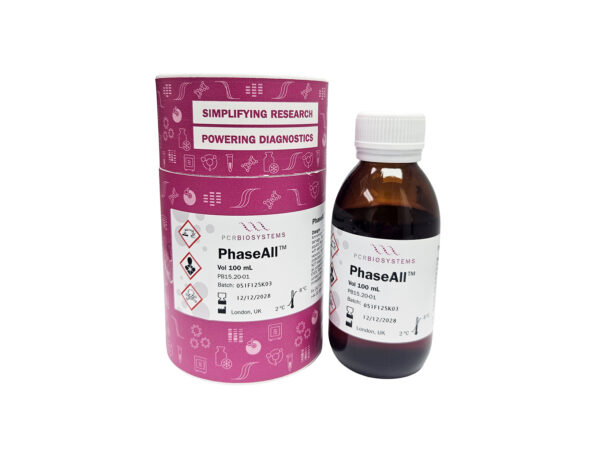
Reliable RNA, DNA and protein extraction from a single sample. PhaseAll™ is a powerful phenol/guanidine-based reagent for the simultaneous extraction of RNA, DNA and protein from biological samples.
Designed for robust phase separation and high-yield recovery, PhaseAll™ offers a versatile solution for researchers requiring multiple biomolecules from limited or precious sample material, with this classic tri-extraction formulation.
Compatible with a broad range of tissue types (plant, animal and human, FFPE-fixed samples), cells (cell cultures, bacteria, yeast) and biological fluids (saliva, blood, and others), this monophasic reagent simplifies nucleic acid and protein isolation workflows by consolidating them into a single, streamlined procedure. Whether you’re preparing RNA for RT-qPCR or RNA Seq, DNA for PCR or genotyping, or proteins for downstream gel-based analyses, PhaseAll™ ensures consistent, high-quality extractions without the need for multiple kits.
Features
- Extraction efficiency: high-yield isolation of RNA, DNA, and proteins
- 3-from-1 workflow: streamlined nucleic acid and protein purification from a single sample, ideal for limited input material.
- Versatile sample compatibility: animal, plant, cultured cells, tissues, yeast, bacteria and biological fluids, high fat/oil/polysaccharide samples.
- Maximised RNA integrity: high-purity RNA suitable for sensitive downstream applications such as RT-qPCR and RNA sequencing.
- DNA and protein recovery: efficient isolation of DNA and protein fractions from the same lysate.
3-from-1 macromolecule extraction ensures you get RNA, DNA and protein from one sample. Designed for robust phase separation and high-yield recovery, PhaseAll™ offers a versatile solution for researchers requiring multiple biomolecules from limited or precious sample material.
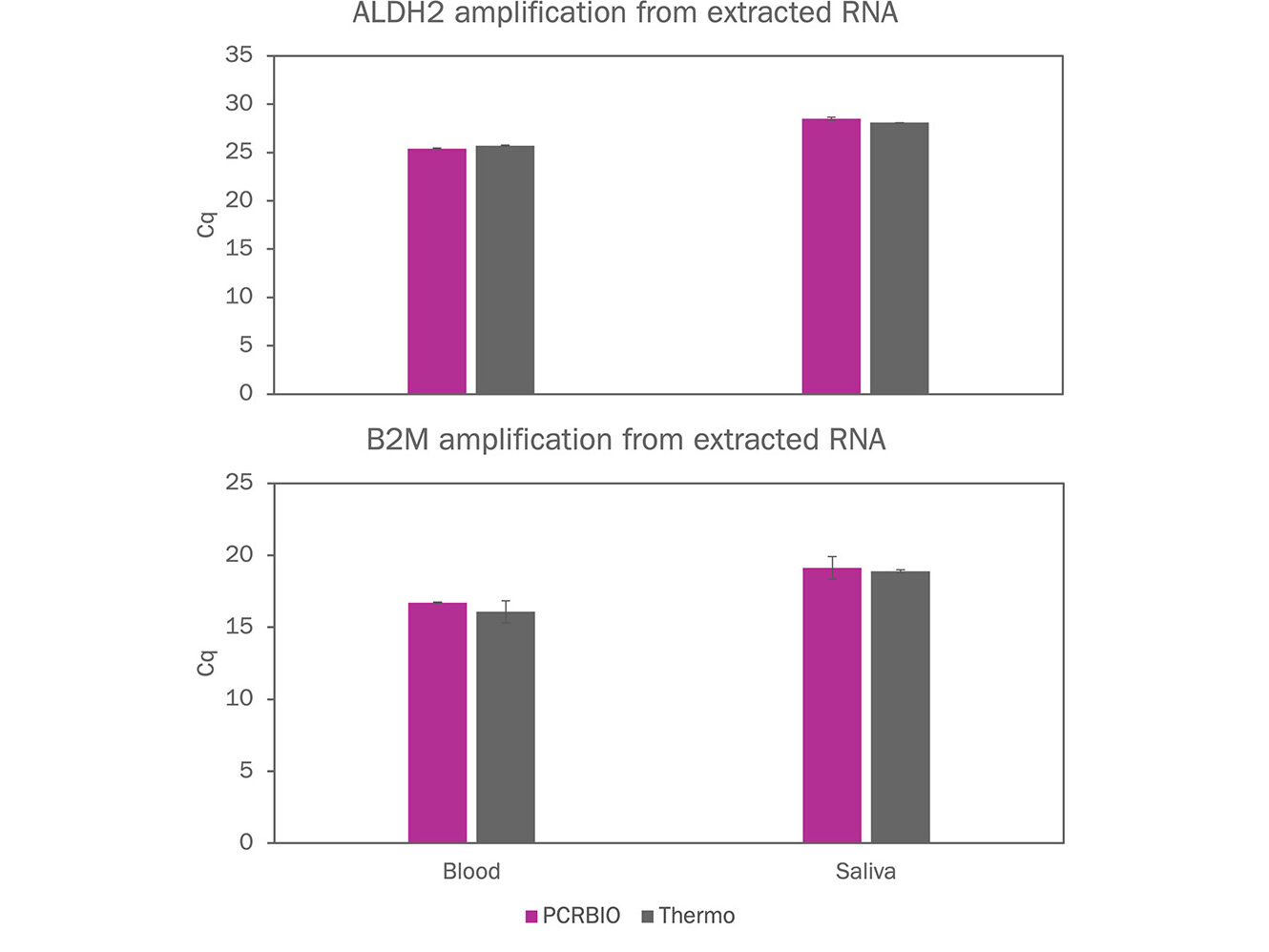
Fig 1. Amplification of housekeeping genes on RNA extracted with PhaseAll™
from blood and saliva samples. PhaseAll™ (PCRBIO, purple) and TriZol (Thermo, gray) tri-extraction reagents were used to extract RNA from human blood and saliva samples. Extracted RNA was used as a template in RT-qPCR with the qPCRBIO® SyGreen 1-Step Kit against the alcohol-dehydrogenase (ALDH2) and beta-microtubulin (B2M) transcripts. There was no significant difference in the levels of either transcript, regardless of which extraction reagent was used.
Applications
- Total RNA extraction
- DNA extraction
- Protein extraction
- miRNA isolation
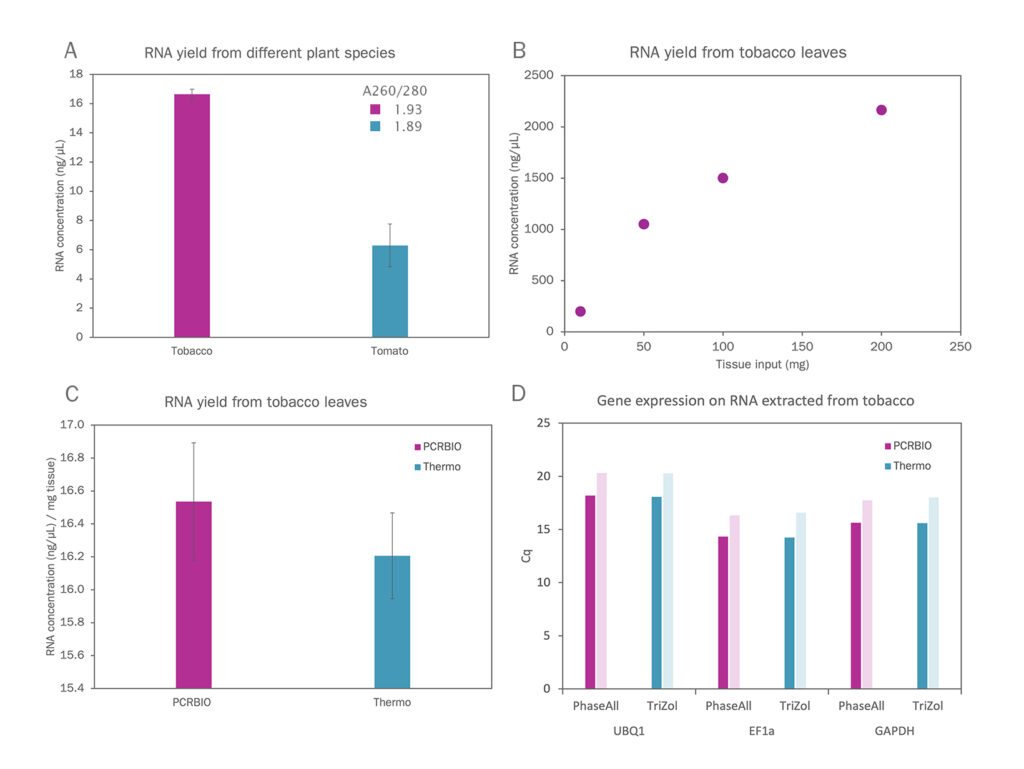
Versalile sample input means PhaseAll™ tri-extraction reagent is compatible with a broad range of tissue types (plant, animal and human, FFPE-fixed samples), cells (cell cultures, bacteria, yeast) and biological fluids (saliva, blood, and others), this monophasic reagent simplifies nucleic acid and protein isolation workflows by consolidating them into a single, streamlined procedure without the need for multiple kits.
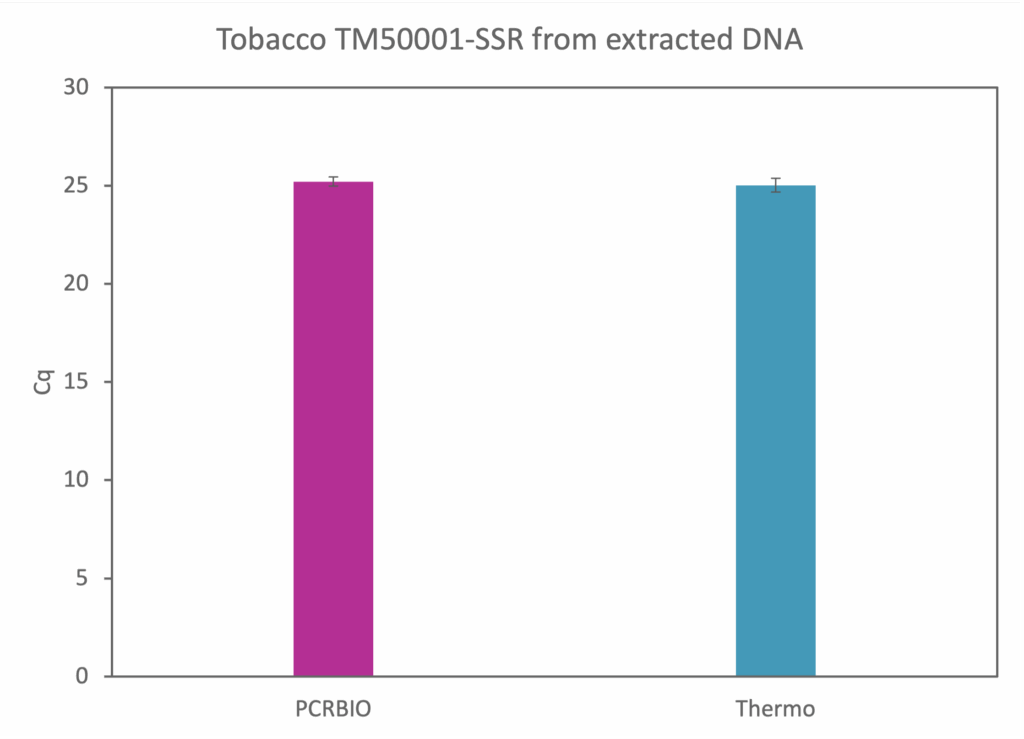
Documents

Product Flyers


Product Manuals

Material Safety Data Sheets

Certificate of Analysis Finder
Specifications
100 extractions
Component
100 extractions
PhaseAll™ extraction reagent
100 mL
100 extractions
Component
PhaseAll™ extraction reagent
100 extractions
100 mL
Reaction Volume
Storage
Variable - 1 mL per extraction suggested
Stored between 2 – 8 °C in the original container. If stored correctly the product will retain full activity until the indicated expiry date.
Reaction Volume
Variable - 1 mL per extraction suggested
Storage
Stored between 2 – 8 °C in the original container. If stored correctly the product will retain full activity until the indicated expiry date.
Instrument Compatibility
Not Applicable
Sample type
Bacteria, yeast, animal (including human), plants, cell culture, tissue, FFPE tissues, biological fluids (saliva, blood), materials with high oil/fat/polysaccharide content, and a wide range of other sample types.
FAQs
How should I prepare FFPE samples for PhaseAll™ extraction
FFPE samples should be prepared as follows:
Deparaffinisation:
Remove the paraffin wax from the FFPE tissue section using a solvent like xylene or a specialized buffer.
Xylene is the most widely used solvent in the deparaffinisation of tissue sections. It dissolves the paraffin wax, enabling it to be removed from the tissue. For effective deparaffinization, the slides are typically immersed in xylene or a xylene substitution for 2–3 cycles, with each immersion lasting between 5 and 10 minutes. Xylene is highly effective but also toxic, so appropriate safety measures – such as working in a well-ventilated space or using xylene substitutes – should be followed.
The first immersion into the xylene bath begins dissolving the paraffin. After 5-10 minutes, the slides are transferred to the next bath. A second xylene bath ensures any remaining paraffin is fully dissolved, further improving the quality of deparaffinisation. Researchers may choose to perform a third xylene bath for thicker or older sections.
Rehydration:
After the paraffin is removed, the tissue needs to be rehydrated to restore its original state. This is done by gradually decreasing the concentration of ethanol, which is critical to prevent tissue damage. This step also helps eliminate any residual xylene that may still be present in the sample.
The rehydration process typically follows these 4 steps:
- 100% Ethanol: The slides are immersed in absolute ethanol for 5 minutes to remove any remaining xylene.
- 95% Ethanol: The slides are transferred to a solution of 95% ethanol for another 5 minutes. This step starts the gradual rehydration process.
- 70% Ethanol: The next step involves placing the slides in 70% ethanol for 5 minutes, which further hydrates the tissue.
- 50% Ethanol: The slides are then moved to 50% ethanol for 5 minutes to ensure full hydration.
By the end of this step, the tissue has been completely rehydrated and is ready for further analysis.
Extraction:
Follow our RNA, DNA or protein extraction protocol in the specific product manual.
Can I use PhaseAll™ for miRNA extraction?
Yes. miRNA can be extracted from all solid samples using PhaseAll™ and following the standard RNA isolation protocol described in the product manual. You can modify this protocol for extraction of free miRNAs from blood serum as outlined below:
-
Sample Preparation:
Add 50–250 µl of serum to 750 µl PhaseAll™. Gently invert the tube 5–8 times and incubate at room temperature for 15 minutes. -
Phase Separation:
Add 200 µl chloroform, invert for 15 seconds, and incubate again for 5 minutes at room temperature.
Centrifuge at 12,000 × g for 15 minutes at 4 °C. -
RNA Precipitation:
Carefully transfer the upper aqueous phase to a new tube. Add 500 µl isopropanol, incubate for 10 minutes at room temperature, and centrifuge again at 12,000 × g for 10 minutes at 4 °C. -
RNA Washing and Resuspension:
Wash the pellet with 75% ethanol, air-dry at room temperature for 30 minutes, and resuspend in 20 µl RNase-free water. -
RNA Quantification:
Measure RNA concentration and purity using a NanoDrop™ UV-Vis Spectrophotometer at A260/280 nm and A260/230 nm ratios.
Compatible with a broad range of tissue types (plant, animal and human, FFPE-fixed samples), cells (cell cultures, bacteria, yeast) and biological fluids (saliva, blood, and others), this monophasic reagent simplifies nucleic acid and protein isolation workflows by consolidating them into a single, streamlined procedure. Whether you’re preparing RNA for RT-qPCR or RNA Seq, DNA for PCR or genotyping, or proteins for downstream gel-based analyses, PhaseAll™ ensures consistent, high-quality extractions without the need for multiple kits.
Features
- Extraction efficiency: high-yield isolation of RNA, DNA, and proteins
- 3-from-1 workflow: streamlined nucleic acid and protein purification from a single sample, ideal for limited input material.
- Versatile sample compatibility: animal, plant, cultured cells, tissues, yeast, bacteria and biological fluids, high fat/oil/polysaccharide samples.
- Maximised RNA integrity: high-purity RNA suitable for sensitive downstream applications such as RT-qPCR and RNA sequencing.
- DNA and protein recovery: efficient isolation of DNA and protein fractions from the same lysate.
3-from-1 macromolecule extraction ensures you get RNA, DNA and protein from one sample. Designed for robust phase separation and high-yield recovery, PhaseAll™ offers a versatile solution for researchers requiring multiple biomolecules from limited or precious sample material.
Fig 1. Amplification of housekeeping genes on RNA extracted with PhaseAll™
from blood and saliva samples. PhaseAll™ (PCRBIO, purple) and TriZol (Thermo, gray) tri-extraction reagents were used to extract RNA from human blood and saliva samples. Extracted RNA was used as a template in RT-qPCR with the qPCRBIO® SyGreen 1-Step Kit against the alcohol-dehydrogenase (ALDH2) and beta-microtubulin (B2M) transcripts. There was no significant difference in the levels of either transcript, regardless of which extraction reagent was used.
Applications
- Total RNA extraction
- DNA extraction
- Protein extraction
- miRNA isolation
Versalile sample input means PhaseAll™ tri-extraction reagent is compatible with a broad range of tissue types (plant, animal and human, FFPE-fixed samples), cells (cell cultures, bacteria, yeast) and biological fluids (saliva, blood, and others), this monophasic reagent simplifies nucleic acid and protein isolation workflows by consolidating them into a single, streamlined procedure without the need for multiple kits.
Request a Quote
Your Selection:
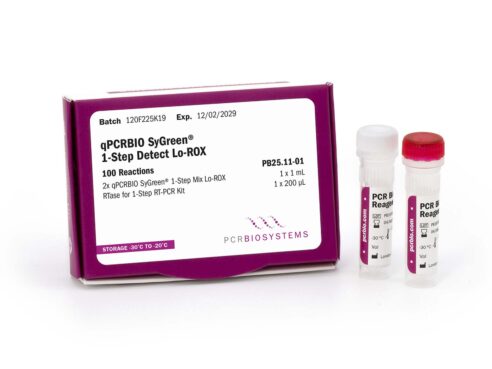
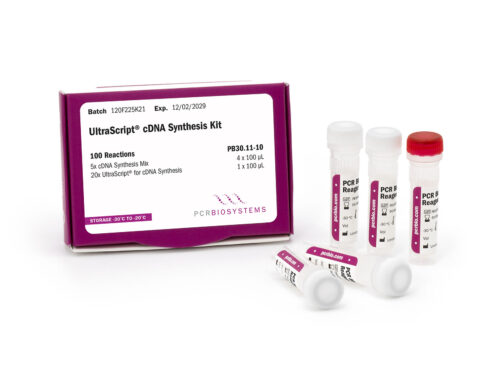
Documents
Product Flyers
Product Manuals
Material Safety Data Sheets
Certificate of Analysis Finder
Specifications
100 extractions
Component
100 extractions
PhaseAll™ extraction reagent
100 mL
100 extractions
Component
PhaseAll™ extraction reagent
100 extractions
100 mL
Reaction Volume
Storage
Variable - 1 mL per extraction suggested
Stored between 2 – 8 °C in the original container. If stored correctly the product will retain full activity until the indicated expiry date.
Reaction Volume
Variable - 1 mL per extraction suggested
Storage
Stored between 2 – 8 °C in the original container. If stored correctly the product will retain full activity until the indicated expiry date.
Instrument Compatibility
Not Applicable
Sample type
Bacteria, yeast, animal (including human), plants, cell culture, tissue, FFPE tissues, biological fluids (saliva, blood), materials with high oil/fat/polysaccharide content, and a wide range of other sample types.
FAQs
How should I prepare FFPE samples for PhaseAll™ extraction
FFPE samples should be prepared as follows:
Deparaffinisation:
Remove the paraffin wax from the FFPE tissue section using a solvent like xylene or a specialized buffer.
Xylene is the most widely used solvent in the deparaffinisation of tissue sections. It dissolves the paraffin wax, enabling it to be removed from the tissue. For effective deparaffinization, the slides are typically immersed in xylene or a xylene substitution for 2–3 cycles, with each immersion lasting between 5 and 10 minutes. Xylene is highly effective but also toxic, so appropriate safety measures – such as working in a well-ventilated space or using xylene substitutes – should be followed.
The first immersion into the xylene bath begins dissolving the paraffin. After 5-10 minutes, the slides are transferred to the next bath. A second xylene bath ensures any remaining paraffin is fully dissolved, further improving the quality of deparaffinisation. Researchers may choose to perform a third xylene bath for thicker or older sections.
Rehydration:
After the paraffin is removed, the tissue needs to be rehydrated to restore its original state. This is done by gradually decreasing the concentration of ethanol, which is critical to prevent tissue damage. This step also helps eliminate any residual xylene that may still be present in the sample.
The rehydration process typically follows these 4 steps:
- 100% Ethanol: The slides are immersed in absolute ethanol for 5 minutes to remove any remaining xylene.
- 95% Ethanol: The slides are transferred to a solution of 95% ethanol for another 5 minutes. This step starts the gradual rehydration process.
- 70% Ethanol: The next step involves placing the slides in 70% ethanol for 5 minutes, which further hydrates the tissue.
- 50% Ethanol: The slides are then moved to 50% ethanol for 5 minutes to ensure full hydration.
By the end of this step, the tissue has been completely rehydrated and is ready for further analysis.
Extraction:
Follow our RNA, DNA or protein extraction protocol in the specific product manual.
Can I use PhaseAll™ for miRNA extraction?
Yes. miRNA can be extracted from all solid samples using PhaseAll™ and following the standard RNA isolation protocol described in the product manual. You can modify this protocol for extraction of free miRNAs from blood serum as outlined below:
-
Sample Preparation:
Add 50–250 µl of serum to 750 µl PhaseAll™. Gently invert the tube 5–8 times and incubate at room temperature for 15 minutes. -
Phase Separation:
Add 200 µl chloroform, invert for 15 seconds, and incubate again for 5 minutes at room temperature.
Centrifuge at 12,000 × g for 15 minutes at 4 °C. -
RNA Precipitation:
Carefully transfer the upper aqueous phase to a new tube. Add 500 µl isopropanol, incubate for 10 minutes at room temperature, and centrifuge again at 12,000 × g for 10 minutes at 4 °C. -
RNA Washing and Resuspension:
Wash the pellet with 75% ethanol, air-dry at room temperature for 30 minutes, and resuspend in 20 µl RNase-free water. -
RNA Quantification:
Measure RNA concentration and purity using a NanoDrop™ UV-Vis Spectrophotometer at A260/280 nm and A260/230 nm ratios.


